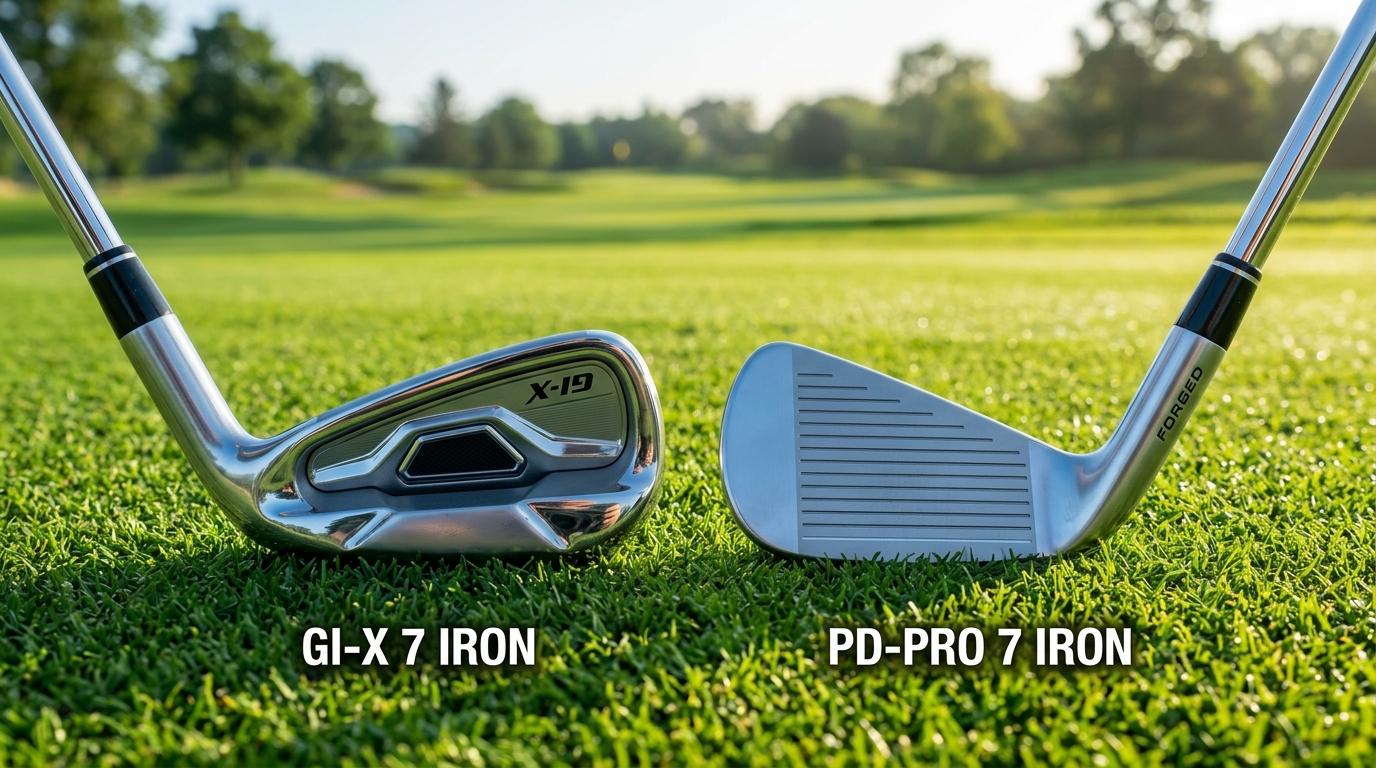
Standing on the fairway at your local South African course with 150 metres to the green, the last thing you want is self-doubt over the club in your hands. Should you be playing sleek, confidence-boosting irons that pump out extra distance, or ultra-stable heads designed to save you from severe off-centre strikes?
The debate between forgiving irons vs players distance irons is one of the most common questions golf pros hear. Picking the right category can instantly shave strokes off your scorecard, while picking the wrong one can turn a Sunday morning round into a long walk in the bushveld. Let us break down both categories and help you match the right technology to your unique physical traits and swing.
What Are Forgiving Irons?
Forgiving irons—often classified as game improvement irons—are engineered with one primary goal: maximum help on every shot. If your strike location moves all over the clubface, these clubs are built to keep your ball flying straight and high.
Key features usually include:
- Thick Top Lines & Wide Soles: The extra weight low and back creates a high launch effortlessly, even out of thick kikuyu turf.
- Large Cavity Backs & Perimeter Weighting: Pushing mass to the edges keeps the clubhead stable when you hit the ball off the toe or heel.
- Noticeable Offset: Helps average golfers square the clubface at impact to reduce a frustrating slice.
If you are searching for forgiving irons for high handicappers, this category is your best friend. They offer high launch angles, maximum distance control on mishits, and immense confidence when address position feels intimidating.
What Are Players Distance Irons?
Players distance irons are the middle ground between workable blades and chunky game improvement clubs. They look like a tour player's iron at address, but pack hidden modern distance technology inside the head.
Key features usually include:
- Hollow-Body Construction: Thin face inserts backed by foam or micro-spheres deliver explosive ball speed across the face.
- Sleek, Compact Aesthetics: Thin top lines, minimal offset, and narrower soles that cut through the turf cleanly.
- Workability with a Cushion: Allows mid-to-low handicappers to shape shots left-to-right or right-to-left without losing 20 metres on a slight mishit.
These are often considered the best irons for game improvement for golfers who hit the ball relatively consistently but want cleaner visuals and an extra boost of speed without giving up all forgiveness.
Head-to-Head: Forgiving Irons vs Players Distance Irons
To make your decision easier, here is how the two categories compare on key performance metrics:
- Off-Centre Hit Protection: Forgiving irons win hands down. They retain high ball speeds even when struck near the toe or heel.
- Distance & Ball Speed: Players distance irons often win on pure flushed shots due to high-tech face inserts, though forgiving irons match them on average shot distance.
- Turf Interaction: Players distance irons suit players with steeper, more precise attack angles, while wide-soled forgiving irons prevent digging for sweepers and diggers alike.
- Visual Appeal: Players distance irons offer a compact, refined shape that many golfers prefer looking down at.
Why Physical Traits Matter More Than Head Design
Here is a secret most golfers overlook: choosing between forgiving irons vs players distance irons is only half the battle. Buying a premier set of game improvement irons will not fix a slice if the shaft flex is too stiff, or if the length is incorrect for your height.
Matching physical traits to your gear is critical:
- Height & Stature: Golfers over 1.85m tall typically need lengthened shafts and adjusted lie angles so they do not have to hunch over at address.
- Swing Speed & Shaft Flex: Playing a shaft that is too stiff prevents proper shaft loading, resulting in low, weak shots that slide right.
- Handedness & Setup: Right- and left-handed players require identical precision in lie alignment to ensure straight shot starts.
Buying certified pre-owned golf clubs lets you access top-tier technology at a fraction of retail prices—saving you thousands of Rands—provided the specifications match your body.
Find Your Perfect Fit with The AI Caddy
You do not need to guess which category or specs match your body type. We built a smart online advisor to match your exact traits with our live inventory of certified pre-owned gear.
Here is how simple it is to get set up:
- Share Your Stance & Stature: Tell us if you play right- or left-handed and whether you are standard height or over 1.85m tall.
- Define Your Game: Input your handicap and typical shot shape so we can narrow down forgiving irons vs players distance profiles.
- Set Your Budget: Select your ideal price range in Rands to explore high-value, certified pre-owned sets.
- Get Matched: Receive instant recommendations from our live catalog, tailored precisely to your physical traits and budget.
Stop adapting your swing to the wrong clubs. Match your stance, stature, and skill level to certified used equipment today.
Ready to elevate your game? Test drive The AI Caddy right now and find the exact iron set built for your swing!